

How to choose stone for a façade
Stone on a façade is not only an aesthetic decision – it endures sun, frost, rain and pollution for years. The right choice means a façade that ages well.
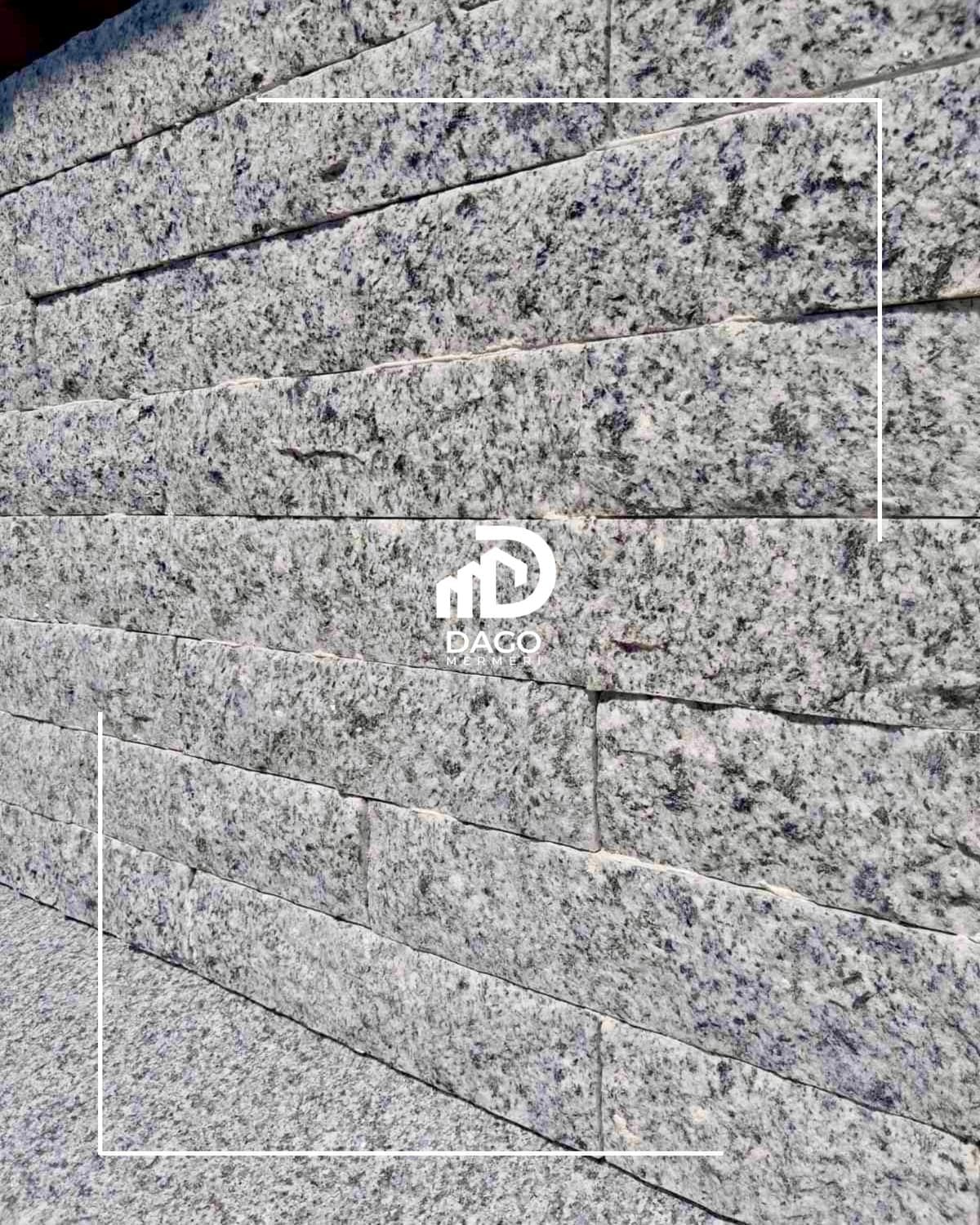
What should you check before choosing stone for a façade?
- Absorption – how much water the stone takes in; on exterior walls it is key.
- Frost resistance in our climate.
- The weight per m² and how it will be mounted.
- The finish – split face, rough or polished – and the look the building calls for.
- The quantity, with a reserve for cutting.
Why does absorption matter?
On a façade exposed to our climate, low absorption is key. Water that gets into the stone freezes and expands in winter, so a stone that absorbs less copes better with freeze-thaw cycles. Granite and a well-chosen limestone withstand these cycles; travertine needs sealing. Marble is used outdoors too, on façades most often as split face.
Split face, rough or polished finish?
Split Face gives depth and shadow; a polished finish gives a calmer, contemporary line. The choice follows the architecture.
- Split face – pieces with a naturally split face; strong texture and a play of light and shadow, for façades, boundary and feature walls.
- Rough finish – a matt, textured surface, calm to the eye and practical outdoors.
- Polished finish – brings out the colour and pattern; for contemporary, flat surfaces.
Split face is part of our decorative stone range – marble, granite and gneiss, in stock in Veles.
How much does façade stone weigh?
The thickness of the panels and the mounting system affect the load on the structure. For our stones, 1.5 cm split face weighs about 39–41 kg/m², and 2 cm about 52 kg/m². Granite tiles 1.2 cm thick weigh about 31–32 kg/m². The exact weight per m² is listed on every product page.
How is stone mounted on a façade?
Split face and thinner tiles are usually bonded with stone adhesive to a prepared, even surface. Larger and heavier panels at height use mechanical anchors or ventilated façade systems, which typically use thinner, calibrated panels. The system is chosen by the designer or the contractor, according to the wall and the height of the building.
How much stone do I need?
Work out the wall area and subtract the windows and doors. Add a reserve for cutting and corners – usually a few percent, more on complex walls. The 30 × 7 cm split face comes in boxes of 15 pieces, which is 0.315 m² per box. In My Quote, enter the m² or the number of boxes, and the pieces, area and estimated weight are calculated for you.
How do you care for a stone façade?
A façade needs little care: an occasional wash with water and a soft brush, without acidic or harsh cleaners. Porous stones such as travertine benefit from sealing that protects them from moisture and staining.
In short
- Check the absorption figure for exterior use.
- Agree thicknesses and tolerances up front.
- Work out the m² with a reserve for cutting.
- See the stone in person, in daylight, before you decide.
Always view the stone in person – at the warehouse and on the building itself. Stone reads differently under different light.
If you are not sure which stone suits your façade, write to us or send a quote request – we will suggest a stone for the building.
Last updated: